By E.K KING
The money is available, and Ukraine urgently needs more interceptors. What Kyiv still needs is permission for the EU funds to be spent on American weapons.
Russia continues to strike Ukraine with missiles and drones, while Kyiv’s supply of PAC-3 interceptors is running dangerously low.
The European Union has already approved a €90 billion support loan for Ukraine. Around €60 billion of that money is intended for defense production and weapons procurement.
It would seem to offer an obvious solution: use the money to replenish the interceptors fired by Ukraine’s Patriot air defense systems.
But that purchase has not yet been approved.
The obstacle is not a lack of European funding or an American refusal to sell. It is a rule designed to prevent too much of the EU’s defense money from being spent outside Europe.
Ukraine Is Asking for an Exception
Ukraine has formally asked the EU for permission to spend several billion euros from the loan on PAC-3 interceptors, according to Defense News. It is Kyiv’s first request to use this particular funding program to purchase missiles for the American-made Patriot system.
Patriot is the air defense system. PAC-3 is one of the interceptors it fires, with a particularly important role in defending against ballistic missiles.
That distinction matters because Ukraine has more options for dealing with drones. Depending on the target, it can use electronic warfare, anti-aircraft guns or less expensive missiles.
The list of weapons capable of stopping an incoming ballistic missile is much shorter. PAC-3 is one of the few interceptors available to Ukraine for that mission.
As Russia continues its attacks on Kyiv, Odesa and other cities, every PAC-3 Ukraine fires protects something that could otherwise be destroyed: a power facility, a military position or a densely populated area.
The problem is that every successful interception also reduces a limited and difficult-to-replace stockpile.
European Commission President Ursula von der Leyen confirmed on September 2 that the EU was reviewing Ukraine’s request. After meeting NATO Secretary General Mark Rutte, she said European support would include air defense and PAC-3 systems, adding that the exemption process was moving in the right direction.
So why does Ukraine need an exemption in the first place?
The answer lies in what the €90 billion loan was created to accomplish.
The Money Is Also Meant to Rebuild Europe’s Defense Industry
The EU completed the legal framework for the Ukraine loan in April. About €30 billion was allocated to government finances and economic support, while another €60 billion was set aside for defense-related investment and procurement.
That defense funding has two jobs.
It must help Ukraine obtain weapons, but it is also supposed to expand production inside Ukraine and Europe.
The war has exposed Europe’s limited ammunition reserves, slow production rates and continued dependence on the United States for several critical weapons. European governments therefore want new defense spending to create factories, production lines and skilled jobs at home.
If most of the €60 billion simply flows to American manufacturers, Ukraine may receive urgently needed weapons, but Europe’s own defense industry will gain little additional capacity.
The loan consequently includes restrictions on where the weapons and their components may come from. As a general rule, components produced outside Ukraine and eligible European or partner countries cannot represent more than 35% of a purchase’s value.
PAC-3 interceptors are manufactured in the United States and do not automatically qualify.
Ukraine must show that an urgently needed equivalent cannot be obtained quickly enough from an eligible supplier. EU members can then authorize an exception.
There is already a precedent. Ukraine received a similar exemption in April for Chinese-made drone components that could not be replaced quickly enough through approved sources.
The PAC-3 request, however, carries greater political weight.
Chinese components are usually one part of a broader drone supply chain. PAC-3 is a complete, advanced American weapon. Funding it with several billion euros would amount to a public acknowledgment that Europe still lacks a timely substitute for one of Ukraine’s most important missile defenses.
Approval Would Only Be the Beginning
Ukraine’s problem extends well beyond its shortage of interceptors.
The Ukrainian Defense Ministry says the country faces a $27 billion gap in its defense budget. Kyiv has asked its partners to accelerate the EU loan, use their national budgets to purchase Ukrainian-made drones and reopen discussions over the use of frozen Russian assets.
Together, these requests reveal the broader pressure building around the war. Ukraine needs weapons, but it also needs a sustainable way to pay for them as the conflict continues.
Even an EU exemption would not put new PAC-3 interceptors in Ukrainian launchers immediately.
Demand for the missile is rising across Europe, Asia and the Middle East. Existing production must serve the U.S. military, Ukraine and several other countries rebuilding their air defense inventories.
EU approval would instead give Ukraine a funded route into that production queue. It would answer who can pay the bill, even if delivery schedules remain another problem.
EU representatives are expected to consider the request on September 7. If approved, it would allow Ukraine to use the €90 billion loan for its first purchase of American-made Patriot interceptors under the program. It could also establish a path for future purchases of other U.S. weapons when European alternatives are unavailable.
For the EU, the decision comes down to an uncomfortable choice: should the money close Ukraine’s immediate air defense gap, or should it remain tied as closely as possible to the long-term growth of Europe’s defense industry?
The outcome will not resolve that tension. It will show how far the EU is prepared to relax its “buy European” ambitions when Ukraine’s battlefield needs can no longer wait.
Sources: Defense News and the Council of the European Union.
Reporting reflects information available as of September 6, 2026. At that time, the EU had not announced a final decision on Ukraine’s exemption request.
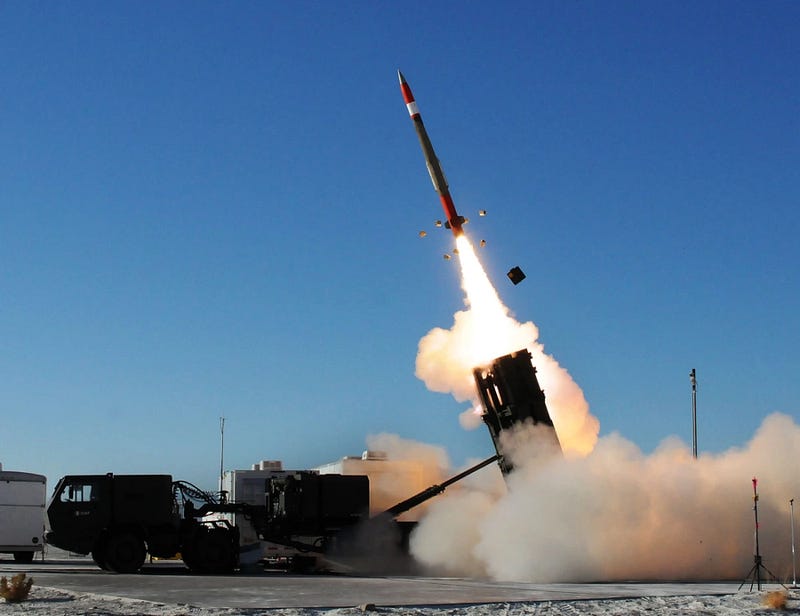
A PAC-3 MSE interceptor launches during a test at White Sands Missile Range, New Mexico. The European Union is reviewing Ukraine’s request to use EU-backed funding to purchase the American-made interceptors. Photo by John Drew Hamilton/U.S. Army.
Photo: John Drew Hamilton, White Sands Missile Range Public Affairs/U.S. Army. Public domain via DVIDS.
Originally published on Medium on September 6, 2026.
 Asia Horizon Review