By Asia Horizon Review
By E.K KING
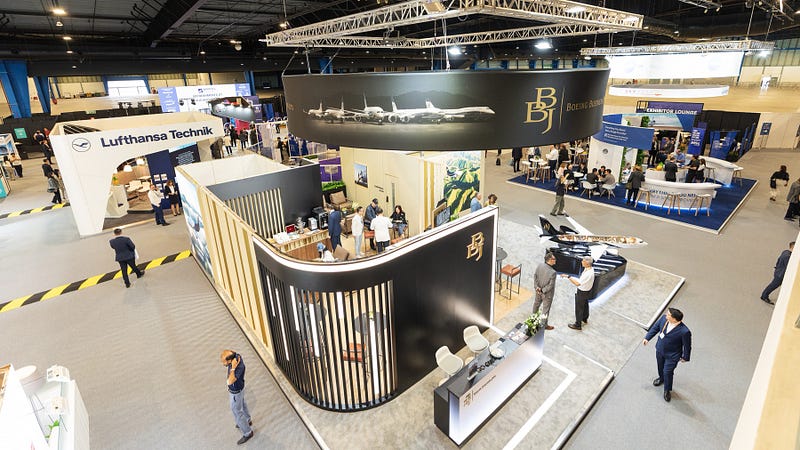
Asia Pacific’s business aviation industry continues to gain momentum, with Business Aviation Asia Forum & Expo (BAAFEx) 2027 announcing strong exhibitor participation months ahead of the event. Major companies including AEG Fuels, Amber Aviation, Boeing Business Jets (BBJ), and Lufthansa Technik have already confirmed their attendance, highlighting growing confidence in the region’s long-term aviation outlook.
Scheduled for 22 – 24 March 2027 at Singapore’s Changi Exhibition Centre, BAAFEx expects to welcome more than 3,000 industry professionals and over 75 participating companies, representing a 50% increase in visitors and exhibitors compared with its inaugural 2025 edition.
More Than Aircraft: A Complete Aviation Ecosystem
Unlike traditional airshows that primarily showcase aircraft, BAAFEx focuses on the broader business aviation ecosystem. Exhibitors span aircraft manufacturing, charter operations, aircraft management, maintenance, fuel supply, flight support, inflight connectivity, airport services, cabin interiors, regulatory services, and aviation recruitment.
This reflects a broader reality: modern business aviation depends on a network of specialized industries working together rather than aircraft manufacturers alone.
Long-Range Aircraft Continue to Lead Demand
According to Asian Sky Group’s Business Jet Fleet Report YE 2025, new business jet deliveries into Asia Pacific reached US$2.24 billion in 2025. Long-range business jets accounted for 34.9% of total market revenue, underscoring demand from corporations and high-net-worth individuals seeking nonstop connectivity between Asia, Europe, and North America.
Boeing Business Jets noted that customers increasingly prioritize productivity, range, comfort, and operational reliability as international business travel continues to recover.
Fuel, Infrastructure, and Supply Chains Matter More Than Ever
One notable theme at BAAFEx 2027 is operational resilience.
Recent geopolitical tensions have reminded the aviation industry that reliable fuel supply, diversified logistics networks, and efficient trip support services are becoming strategic assets rather than routine operational requirements.
The forum will examine topics including:
- Sustainable Aviation Fuel (SAF)
- * Airport infrastructure development
- * Fixed Base Operator (FBO) expansion
- * Supply chain resilience
- * Aircraft maintenance (MRO)
- * Advanced inflight connectivity
These issues are increasingly important as business aviation expands across Asia’s diverse regulatory and operational environments.
Charter Aviation Becomes Increasingly Flexible
Business aviation in Asia is also evolving beyond traditional aircraft ownership.
According to Asian Sky Group’s Charter Report 2025, the region added 19 newly delivered charter aircraft and 70 pre-owned aircraft during 2025, reflecting growing demand for flexible travel options.
Fractional ownership, shared leasing, membership programs, and on-demand charter services are becoming more common, allowing companies and individuals to access private aviation without purchasing an aircraft outright.
Why It Matters
Business aviation often receives less public attention than commercial airlines, yet it plays an important role in supporting international business, medical transport, emergency response, government travel, and investment across the region.
The continued expansion of BAAFEx suggests that Asia Pacific remains one of the world’s fastest-growing business aviation markets. At the same time, discussions surrounding sustainable aviation, infrastructure resilience, and cross-border cooperation highlight that the industry’s future will depend not only on technological innovation but also on stable regional collaboration.
For Asia, the challenge is balancing economic development with sustainability, operational resilience, and peaceful international cooperation – ensuring aviation continues to connect people, markets, and opportunities across the region.
Originally published on Medium on August 3, 2026.
 Asia Horizon Review