Chinese military-linked researchers have been using outputs from leading U.S. artificial intelligence models, including OpenAI and…
By E.K KING
Chinese military-linked researchers have been using outputs from leading U.S. artificial intelligence models, including OpenAI and Anthropic systems, to train domestic AI models for defense applications, according to a Reuters review of more than 80 Chinese academic papers and patents.
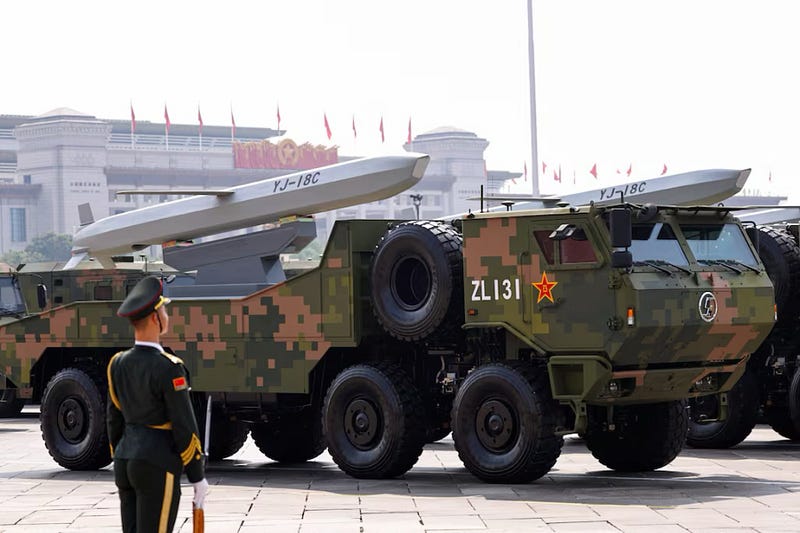
(Tingshu Wang/Reuters)
The investigation offers one of the clearest public views yet into how Chinese military institutions are leveraging model distillation – a technique that transfers knowledge from large AI models into smaller, more efficient systems – to accelerate domestic AI development despite U.S. export restrictions on advanced chips.
Unlike copying an AI model, model distillation trains a smaller model using the responses and reasoning patterns produced by a more capable system. The result is a lightweight AI that can operate locally with significantly lower computing requirements.
Reuters found the approach being applied across a range of military-related projects, including:
- Autonomous drone navigation
- * Real-time target recognition
- * Maritime operational simulations
- * Cyber operations
- * Military intelligence analysis
- * Social media monitoring
One paper from PLA Unit 96941 described using GPT-3.5 to summarize sensitive military software before training a domestic model that could operate entirely inside secure Chinese military networks.
Other studies from the National University of Defense Technology and the Academy of Military Sciences showed distilled AI models being deployed on drones and tactical platforms where communications may be unavailable.
The findings also highlight a broader shift in AI competition. Rather than focusing solely on building ever-larger frontier models, countries are increasingly emphasizing lightweight AI systems that can run on edge devices such as drones, satellites, and autonomous platforms.
At the same time, Chinese researchers are beginning to study defensive measures against “data-free distillation,” recognizing that their own AI models could eventually face similar attempts at capability extraction.
For Asia, this development underscores how AI is becoming deeply integrated into national security, autonomous systems, and cyber operations. While AI offers enormous opportunities in disaster response, healthcare, and industrial innovation, its growing role in military competition also raises important questions about transparency, international governance, and strategic stability.
Originally published on Medium on August 3, 2026.
 Asia Horizon Review