From energy security and drug trafficking to Taiwan’s diplomatic presence, a summit in Palau shows why Pacific Island countries now command…
By E.K KING
From energy security and drug trafficking to Taiwan’s diplomatic presence, a summit in Palau shows why Pacific Island countries now command greater attention from regional powers.
The United States and Australia announced a combined $580 million in funding for Pacific Island countries on September 2.
The United States will provide $150 million, while Australia has committed A$600 million, worth about $430 million. The two funding packages serve different purposes, but both reflect a broader shift: Washington and Canberra are increasing their engagement in the Pacific as China expands its presence across the region.
The announcement came during the 55th Pacific Islands Forum Leaders Meeting in Palau. The forum brings together 18 members, including Australia, New Zealand, Palau, Fiji, the Solomon Islands, Tuvalu and the Marshall Islands. It is the region’s main political body for discussing security, economic development, climate change and regional cooperation.
The U.S. package will support energy security, infrastructure and economic development. Around $60 million will be used to strengthen fuel storage and electricity networks, helping island countries cope with supply disruptions, higher energy prices and extreme weather.
Many Pacific Island countries depend heavily on imported fuel. A storm, shipping delay or sudden rise in global oil prices can affect transport, hospitals and electricity supplies. Stronger storage facilities and power networks can therefore have an immediate effect on daily life.
Australia’s A$600 million package focuses on transnational crime and maritime security.
Pacific leaders approved a regional initiative known as Waqa Moana, which aims to improve intelligence sharing, aerial surveillance, maritime patrols and police training. A major concern is the growing use of Pacific waters by international drug-trafficking networks.
The Australian Federal Police will invest A$49 million in new regional programs. Australia’s Department of Defence will provide another A$312 million over the next decade to help Pacific countries respond to transnational and organised crime.
Canberra has described Waqa Moana as a Pacific-led initiative developed in response to requests from regional governments. That description matters. Pacific countries have repeatedly argued that regional security policies should reflect their own priorities, instead of being designed entirely by larger outside powers.
Small islands with a large strategic reach
On a conventional map, many Pacific Island countries appear as small dots scattered across a huge ocean. Some have populations smaller than a single city in Taiwan.
Their strategic importance becomes clearer when the surrounding waters are included. Pacific countries control vast exclusive economic zones containing fisheries, shipping routes, undersea cables and other marine resources. Their territories also sit along routes connecting Asia, Australia and the Americas.
Palau is a clear example.
Located east of the Philippines and southwest of Guam, Palau has a small population but occupies an important position in the western Pacific. After gaining independence in 1994, the country entered a Compact of Free Association with the United States.
Under the agreement, Washington provides economic assistance and takes responsibility for Palau’s defence. The United States also receives access to Palauan territory for strategic purposes.
As the U.S. military devotes more attention to the Indo-Pacific, access to ports, airfields, communications facilities and surrounding waters has become increasingly important.
China has also expanded its regional relationships. Beijing has funded infrastructure projects, donated a government complex in Vanuatu, developed policing cooperation with the Solomon Islands and established a broader strategic partnership with the Cook Islands.
China describes these projects as normal diplomatic and development cooperation. The United States and Australia are concerned that Beijing’s role could eventually extend further into ports, telecommunications, policing and security.
Roads, hospitals, power networks and police training have consequently become part of a wider competition for regional influence.
Pacific governments do not always view the region through the same strategic lens.
Climate change, rising sea levels, energy costs, illegal fishing, drug trafficking and economic development often have a more direct effect on local communities than rivalry between Washington and Beijing. Many island governments also want to work with several partners without having to choose one side.
The amount of money being offered is therefore only one measure of influence. Whether a project answers local needs, remains transparent and allows Pacific governments to set their own priorities can determine whether a partnership lasts.
Palau brings Taiwan into the discussion
Holding this year’s forum in Palau placed Taiwan near the centre of the meeting.
Palau is one of three Pacific countries that maintain formal diplomatic relations with Taiwan. Taiwan’s Foreign Minister Lin Chia-lung led a delegation to Palau from August 27 to September 3 to attend the Taiwan/ROC – Forum Countries Dialogue and other events held alongside the summit.
Taiwan’s cooperation with Pacific countries covers health care, agriculture, renewable energy, digital resilience, infrastructure and climate adaptation. These projects receive less attention than military bases or major port developments, but they play an important role in Taiwan’s ability to maintain long-term regional relationships.
China objected to the presence of Taiwanese representatives at the forum, arguing that Taiwan was not qualified to participate. Palau continued to support Taiwan’s involvement, bringing the long-running diplomatic dispute between Beijing and Taipei into a meeting focused on development, security and climate issues.
Security concerns were already present at the summit.
Palauan President Surangel Whipps Jr. raised China’s ballistic missile test in the Pacific in July and called for a unified regional response demanding greater transparency and respect for sovereignty. China said the test had been conducted safely and accused Palau of exaggerating the issue.
These tensions gave the U.S. and Australian funding announcement added political weight. The $580 million forms part of a wider effort to demonstrate that Washington and Canberra remain committed to the region.
Taiwan also faces a changing diplomatic environment in the Pacific. Maintaining formal allies remains important, but regional relationships now involve a much wider range of issues, including energy, health care, digital infrastructure, climate resilience and maritime security.
As the United States, China and Australia devote more resources to the region, diplomatic recognition alone will provide Taiwan with limited protection. Its position will increasingly depend on whether its projects address the practical needs identified by Pacific communities.
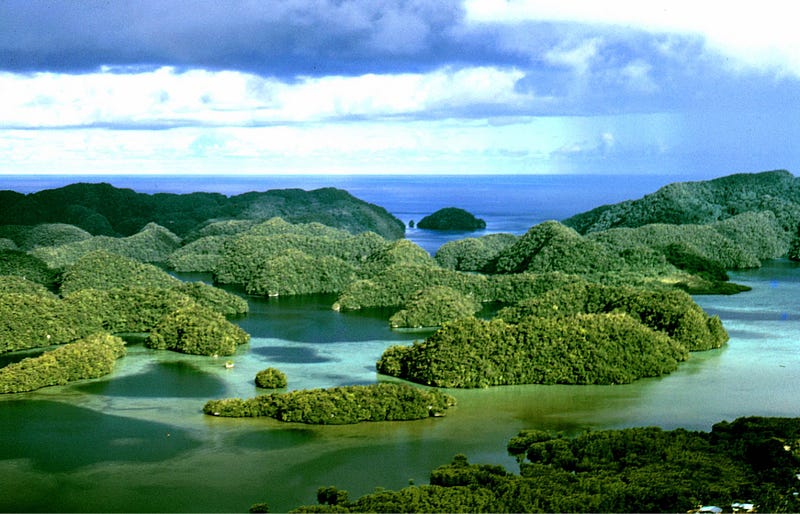
Photo by NOAA
Originally published on Medium on September 3, 2026.
 Asia Horizon Review