By E.K KING
An AI-Powered Boat Is Quietly Changing How Oceans Are Watched
A 33-foot unmanned boat helped the U.S. Navy seize more than $81 million worth of cocaine. Its next mission could reveal how autonomous vessels will reshape maritime security — not just in the Caribbean, but across the Indo-Pacific.
For years, unmanned surface vessels were often seen as experimental technology — promising, but limited to demonstrations and trials.
That perception is changing.
The U.S. Navy has awarded California-based Saildrone a US$16.3 million task order to extend operations of its Voyager unmanned surface vessels across the Caribbean Sea and Eastern Pacific. The contract follows a successful counter-narcotics mission in which one Voyager directly supported the interception of a vessel carrying more than US$81 million worth of cocaine.
The message is becoming clear: autonomous vessels are moving from test platforms to operational assets.
The Value Isn’t Speed — It’s Endurance
Unlike traditional patrol ships, Saildrone’s 33-foot Voyager isn’t designed to chase smugglers.
Its biggest advantage is that it can remain at sea for months, continuously collecting data and monitoring shipping routes without a crew onboard.
Equipped for surface and subsurface surveillance, coastal mapping, and maritime domain awareness, Voyager acts as a persistent sensor rather than another patrol vessel.
That changes the economics of maritime security.
Instead of deploying expensive warships simply to watch vast areas of ocean, navies can use autonomous systems to identify suspicious activity first, then direct manned assets only when needed.
A Glimpse of Future Naval Operations
The Caribbean deployment may look like a counter-drug mission, but its implications extend much further.
Around the world, governments are struggling to monitor enormous maritime areas while facing tighter budgets, aging fleets, illegal fishing, smuggling networks, and increasingly complex gray-zone activities.
Autonomous surface vessels offer a practical answer: longer endurance, lower operating costs, and continuous situational awareness.
Rather than replacing warships, they make every patrol ship, aircraft, and coast guard unit more effective by providing better information before an interception even begins.
Why Asia Should Watch Closely
For Indo-Pacific nations, the lessons may be even more significant than for the United States.
Countries such as Japan, the Philippines, Australia, Indonesia, and Taiwan all face the challenge of monitoring vast maritime spaces where traditional patrols cannot be everywhere at once.
The Caribbean is becoming a real-world laboratory for technologies that could soon appear across the Indo-Pacific.
If autonomous vessels continue proving their value in everyday operations, the future of maritime security may depend less on building larger fleets — and more on keeping intelligent sensors at sea around the clock.
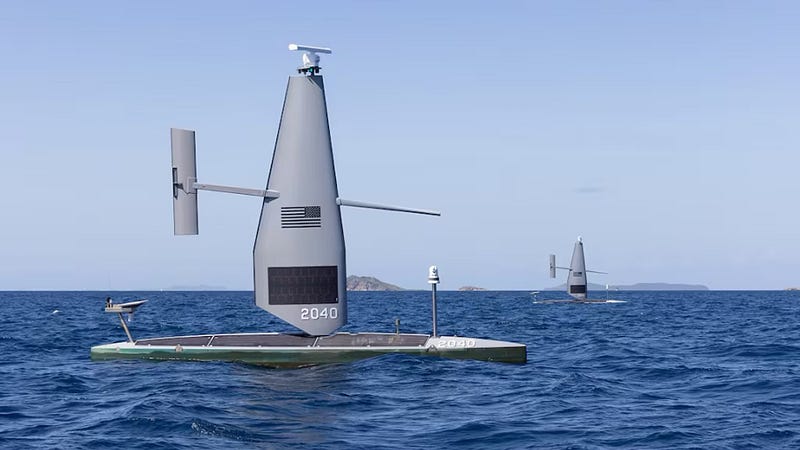
(Saildrone)
Originally published on Medium on August 7, 2026.
 Asia Horizon Review