By E.K KING
The U.S. Department of Defense is accelerating efforts to counter the growing threat posed by inexpensive unmanned boats and small drones in contested waters, announcing a new initiative to field an operational unmanned surface vessel (USV) system within just 120 days.
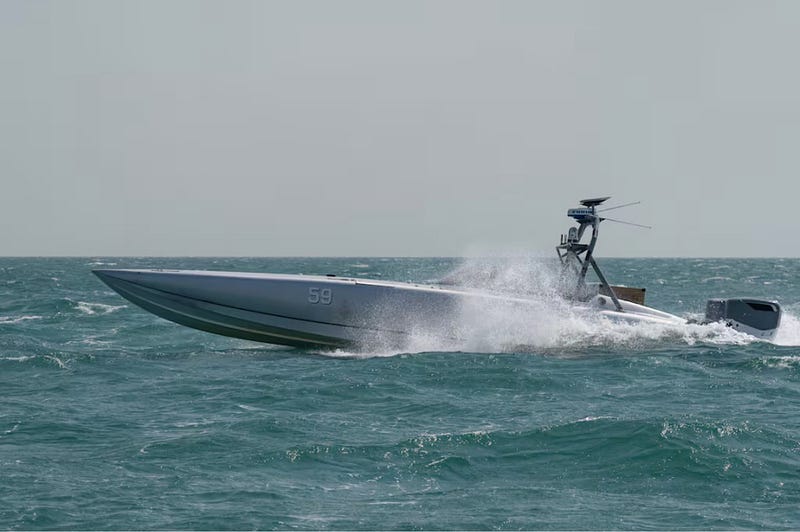
(MC2 Jacob Vernier/Navy)
Managed by the Defense Innovation Unit (DIU), the Suitable Warfighting Adaptive Payloads – Unmanned Surface Vessel (SWAP-USV) program seeks commercially mature autonomous boats capable of carrying and launching at least two aerial drones. These systems are expected to detect, track and defeat maritime threats while dramatically reducing the cost of coastal and littoral operations.
To accelerate development, the Pentagon is offering a $100 million prize challenge, with successful competitors also eligible for procurement contracts backed by an additional $200 million.
The desired system combines autonomous surface vessels with recoverable and one-way attack drones capable of intelligence, surveillance and reconnaissance (ISR), communications relay, electronic warfare, payload delivery and precision strikes. The drones must carry a combined kinetic payload of at least two kilograms.
The USV itself should autonomously patrol, shadow suspicious vessels and, where possible, intercept maneuvering targets while operating in coastal waters, rivers and the open ocean.
Mobility is another key requirement. The complete system must fit inside a standard shipping container, road trailer or military transport aircraft such as the C-130 and C-17. DIU also expressed interest in containerized launch concepts that enable rapid deployment from austere locations.
The competition will unfold across three phases. Sprint 1, scheduled for autumn 2026, requires mission-ready systems to be available for testing within 29 days after selection and aims for field deployment within 120 days. Later phases will expand autonomy, payload options and multi-vendor integration before final evaluations in 2027.
The initiative reflects a broader shift in U.S. defense planning. Rather than relying on multi-million-dollar ships and missiles to defeat inexpensive asymmetric threats, the Pentagon is increasingly pursuing scalable, affordable autonomous systems capable of persistent maritime surveillance and rapid response.
If successful, SWAP-USV could become a significant step toward reshaping future naval operations, especially in contested regions where low-cost unmanned systems are changing the balance of maritime warfare.
Originally published on Medium on July 30, 2026.
 Asia Horizon Review