By E.K KING
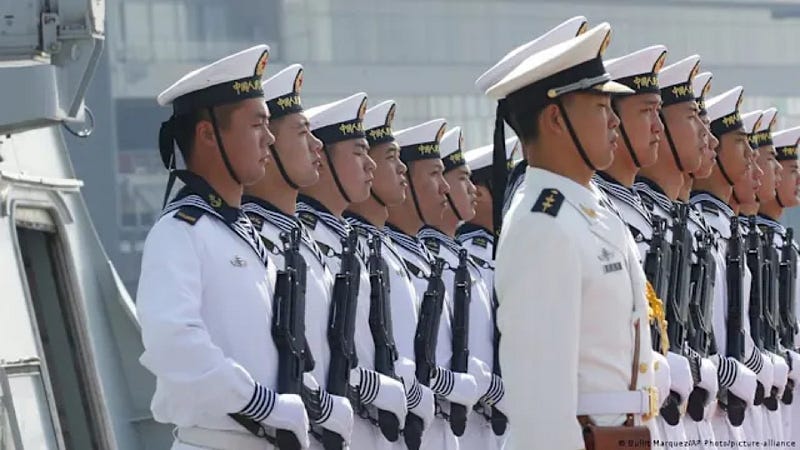
China called it a naval exercise designed to improve “joint operational capabilities.”
Indonesia described it much more casually: a routine PASSEX conducted while one of its warships was sailing home.
They were talking about the same event.
On August 12, the Chinese Navy’s Type 054A guided-missile frigate Honghe and Indonesia’s KRI I Gusti Ngurah Rai-332 carried out a series of drills in waters east of Taiwan.
The activities included maritime communications, formation maneuvers, replenishment at sea and a parting ceremony.
The exercise itself was small and short.
But one detail made it stand out: it took place east of Taiwan.
According to Reuters, it was the first time China had conducted this type of joint military activity with a foreign military in waters east of Taiwan.
That turned what might otherwise have been a routine naval interaction into a much bigger diplomatic story.
Beijing Announced It. Jakarta Played It Down.
China’s Ministry of National Defense announced the exercise on August 11.
Beijing said the Honghe would conduct a “maritime navigation exercise” with an Indonesian frigate, with activities including communications and replenishment at sea.
China said the purpose was to improve the two navies’ “joint operational capabilities,” deepen practical cooperation and help maintain regional peace and stability.
A day later, China’s Eastern Theater Command announced that the exercise had been completed.
Indonesia told the story differently.
The KRI I Gusti Ngurah Rai-332 had previously traveled to Vladivostok, Russia, to participate in a military exercise and was sailing back to Indonesia.
During the return journey, the Indonesian Navy said the ship was conducting Passing Exercises, commonly known as PASSEX, with navies along its route.
A PASSEX is relatively simple.
When warships from two countries are operating near each other, they may use the opportunity to practice communications, formation sailing or other basic procedures.
Navies around the world do this regularly.
Indonesian Navy spokesman Tunggul stressed that such activities are not combat exercises. Jakarta described them as a normal form of naval interaction and maritime diplomacy consistent with Indonesia’s independent foreign policy.
From Indonesia’s perspective, this was essentially a naval exchange conducted on the way home.
One Exercise, Two Different Messages
This difference is what makes the story interesting.
China used terms such as “joint operational capabilities” and described the event as a live-force exercise.
Indonesia emphasized “PASSEX,” the ship’s return journey, maritime diplomacy and the non-combat nature of the activity.
The two versions do not necessarily contradict each other.
A PASSEX can include communications, formation maneuvers and even replenishment exercises. The activities described by China are broadly consistent with what can happen during this type of naval interaction.
The difference is mainly in how each side wants the event to be understood.
Beijing highlighted cooperation between the Chinese and Indonesian navies.
Jakarta placed the exercise within the much less dramatic framework of routine naval diplomacy.
That distinction matters because Indonesia does not want a short naval interaction to be interpreted as Jakarta joining China’s military pressure against Taiwan.
Why Does the Location Matter?
The answer is geography.
Taiwan’s eastern coast faces the Pacific and the Philippine Sea. In a potential conflict, these waters would have a very different role from the Taiwan Strait to the west.
Chinese naval and air activity around Taiwan has increased in recent years, and waters east of the island have appeared more frequently in major People’s Liberation Army exercises and long-range naval operations.
This time, however, there was an additional element: a foreign warship was participating alongside China.
Chinese warships operating east of Taiwan are no longer unusual.
An Indonesian frigate joining one of them is different.
Taiwan criticized Beijing over the exercise, arguing that China was attempting to create the impression that it has authority over surrounding waters.
Taiwanese officials were more cautious about the immediate military threat. A small PASSEX involving two frigates is very different from a large combat exercise.
The larger concern is political.
Washington Also Responded
The issue quickly moved beyond the two ships involved.
According to Taiwan’s Central News Agency, a U.S. State Department spokesperson urged Beijing to stop applying military pressure against Taiwan and instead engage in meaningful dialogue.
Washington also called on other countries to encourage a peaceful resolution of cross-Strait issues.
Indonesia, meanwhile, has another balancing act to manage.
Jakarta has long followed what it calls a “free and active” foreign policy, avoiding formal alignment with any major power.
The Indonesian Navy said KRI I Gusti Ngurah Rai-332 would conduct similar PASSEX activities with other countries during its journey.
The message from Jakarta was fairly simple: exercising with China does not mean Indonesia is choosing China.
The Bigger Question Is Whether It Happens Again
Based on what has been publicly disclosed, the August 12 exercise was not a large-scale joint combat drill.
Communications, formation sailing, replenishment and a parting ceremony remain consistent with a conventional PASSEX.
Still, the “first” matters.
If this was simply a one-off interaction involving an Indonesian warship returning from Russia, it may soon become little more than a diplomatic footnote.
But if China begins conducting similar activities with more foreign navies around Taiwan, the picture changes.
The important shift would not necessarily be larger exercises or more powerful warships.
It would be the gradual normalization of foreign naval vessels operating alongside the Chinese Navy in waters around Taiwan.
That is why a relatively small PASSEX involving just two frigates attracted attention in Taipei, Beijing, Jakarta and Washington.
And it is why the next exercise may matter more than this one.
Originally published on Medium on August 14, 2026.
 Asia Horizon Review