Artificial intelligence is no longer just a tool for the tech industry – it is becoming an essential part of modern national security.
By E.K KING
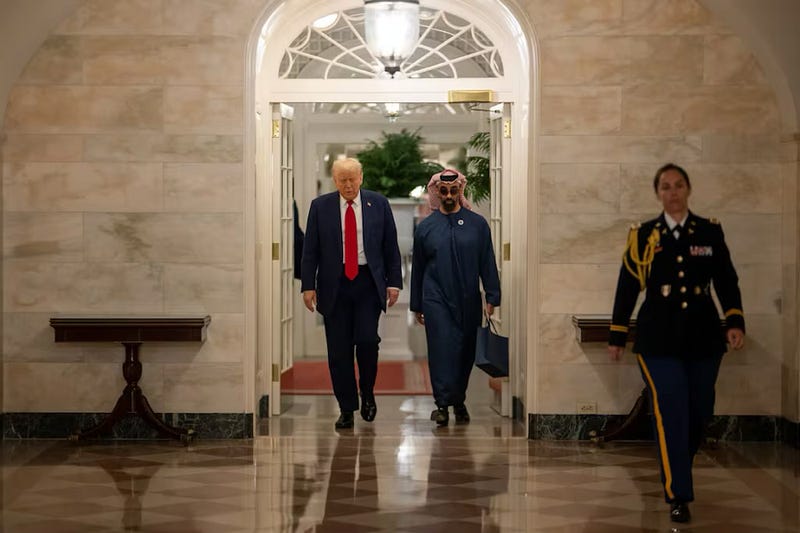
(White House)
The U.S. Central Command (CENTCOM) has announced that it will establish its first bilateral artificial intelligence task force with the United Arab Emirates (UAE). Named Task Force Talon Synapse, the new initiative is expected to begin operations in the coming weeks, marking another step in the growing defense technology partnership between Washington and Abu Dhabi.
Based in Abu Dhabi, the task force will consist of around 20 American and Emirati specialists in artificial intelligence, data science, and cybersecurity. Their mission is straightforward: accelerate the practical use of AI in military and security operations.
According to CENTCOM, the team will focus on three major areas:
- Improving intelligence analysis and decision support through AI.
- * Protecting critical infrastructure such as energy, communications, and transportation systems.
- * Monitoring the regional security environment more efficiently.
CENTCOM Commander Adm. Brad Cooper described the initiative as a historic milestone, emphasizing the shared commitment of both countries to rapidly integrate AI innovations into real-world operations.
The UAE’s Long-Term AI Strategy
The announcement did not emerge overnight.
For years, the UAE has invested heavily in artificial intelligence, viewing it not only as an economic opportunity but also as a national security priority. The country has established dedicated AI institutions, invested in research, and expanded partnerships with international technology companies.
In the defense sector, the UAE has worked with firms such as Anduril Industries to develop advanced autonomous drone technologies, reflecting its ambition to become one of the region’s leading adopters of emerging defense capabilities.
The political relationship has also deepened. During a White House meeting in 2025, UAE National Security Advisor Sheikh Tahnoun bin Zayed Al Nahyan and U.S. officials discussed artificial intelligence alongside broader strategic cooperation, highlighting AI’s growing importance in bilateral relations.
AI Is Changing More Than the Battlefield
When people hear “military technology,” many still imagine fighter jets, missiles, or tanks.
Increasingly, however, the most influential technology may be software.
Artificial intelligence can process satellite imagery within seconds, detect unusual activity from drone feeds, identify cyber threats before they spread, and organize enormous amounts of information that would overwhelm human analysts. In disaster response and humanitarian operations, AI may also help coordinate rescue efforts more quickly and efficiently.
These capabilities can improve decision-making and reduce response times – but they also raise important questions.
As AI becomes more deeply integrated into military systems, governments must ensure that human oversight, transparency, and accountability remain central to its use. Without clear safeguards, rapid technological competition could increase the risks of misunderstanding or unintended escalation during times of crisis.
Technology itself is neither peaceful nor dangerous. Its impact depends entirely on how people choose to use it.
If artificial intelligence can help improve situational awareness, reduce miscalculations, and support more informed decisions, its greatest contribution may ultimately be preventing conflict rather than fighting it.
⸻
Originally published on Medium on July 29, 2026.
 Asia Horizon Review