India is still years away from fielding its first homegrown fifth-generation fighter. But it is already looking at what comes next.
By E.K KING
New Delhi has begun discussions with France about joining work on the Future Combat Air System, or FCAS, a project built around technologies expected to shape the next generation of air combat.
India’s Defence Ministry told Parliament this month that it had begun efforts to join the program.
The timing matters. France had been developing FCAS with Germany and Spain, but disagreements between Paris and Berlin over the fighter at the center of the project eventually broke the partnership apart. France is now looking at how to move forward, potentially creating an opening for another partner.
For India, that opening comes at an important moment.
Its most advanced fighters today include the French-built Rafale, while its first homegrown fifth-generation stealth fighter, the Advanced Medium Combat Aircraft, or AMCA, is still under development.
India cannot simply wait for AMCA to be completed before thinking about the next generation.
China already operates the J-20 stealth fighter and is testing newer combat aircraft. The United States and other major military powers are also developing future air combat systems.
By the time AMCA enters service, the technological race may have moved much further ahead.
That is why India’s interest in FCAS is less about buying another foreign fighter and more about getting involved early in the technologies that could come after AMCA.
Those technologies go far beyond the aircraft itself.
Future fighters are expected to work closely with unmanned aircraft. A crewed jet could send drones ahead to search for targets, collect information, carry weapons or enter areas considered too dangerous for a pilot.
Aircraft, drones, ships, satellites and ground forces could also share information through a common network. Instead of relying only on the radar and sensors aboard one fighter, a pilot could receive a much larger picture of the battlefield from many different sources.
This is one of the ideas behind what FCAS calls a “combat cloud.”
Artificial intelligence is also expected to play a larger role, helping crews sort through information and manage multiple systems during combat.
India wants experience with these technologies before they become mature systems that it can only buy from someone else.
That matters because India has struggled for decades with some of the hardest parts of fighter development.
Jet engines are a clear example. India can design and build military aircraft, but it still depends heavily on foreign technology for high-performance fighter engines.
A partnership with France could give Indian engineers a chance to participate much earlier in the development process.
But that is far from guaranteed.
India and France would still have to agree on how much design work Indian companies would receive, what technology could be shared and who would own the intellectual property.
These details will determine whether India becomes a genuine development partner or mainly a customer and production partner.
For now, the talks remain exploratory.
India is not about to receive a sixth-generation fighter, and it is not abandoning its fifth-generation AMCA.
Instead, New Delhi appears to be trying something it has often struggled to do in military aviation: start preparing for the next technology cycle before the current one is finished.
China’s rapid military modernization makes that increasingly difficult to postpone.
The important part of the India-France talks may therefore not be whether they eventually produce a fighter called FCAS.
It is that India is trying to enter the development of future air-combat technology early enough to help shape it, rather than arriving years later to buy what others have already built.
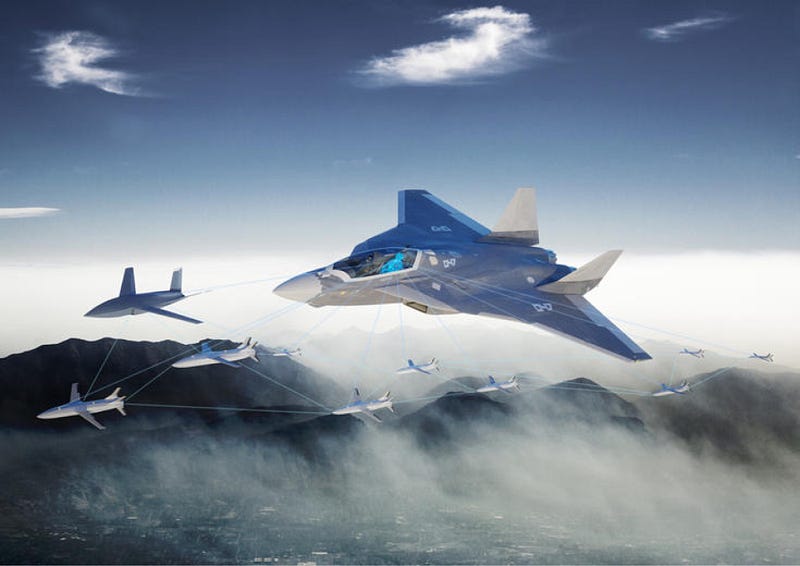
Airbus
Originally published on Medium on August 23, 2026.
 Asia Horizon Review